



Marketing Connections
Marketing Connections interviewed Prof. Bill Watson on the benefits of gaming. His 8-min. podcast interview is the 2nd in the episode Win-Wins Between Consumers and Marketers.
Learn More
The Purdue Center for Serious Games and Learning in Virtual Environments provides support for implementing, designing, developing, and evaluating serious games and virtual environments for learning; encourages collaboration across Purdue and with K-12 schools; and establishes a foundation for securing funding and conducting research at Purdue on the use of serious games and virtual learning environments in education.
Join us on Nov. 2, 2026, for the Purdue AI in P-12 Education Conference.
The Entertainment Software Association’s annual “Essential Facts about the U.S. Video Game Industry Report” found that a very high percentage of U.S. children play video games regularly and that that slightly more than half of players identify as male. Games and virtual environments are today’s popular media, and fit well with the sort of motivating, exploratory, and goal-based, frequent feedback, problem-solving experiences today’s learners seek.
The Purdue Center for Serious Games and Learning in Virtual Environments seeks to encourage collaboration and establish a foundation for research at Purdue on serious games and virtual environments for learning, support innovative instructional practices, and establish a framework for developing and implementing engaging and innovative instruction for both K-12 and higher education classrooms.


November 2, 2026
The theme for our 2026 conference is “Coherence” and focuses on how educational stakeholders can work together to bring alignment to AI in education, moving from fragmented tools to human-centered practice that aligns innovation with core educational goals and outcomes. Presentations will include resources and strategies to promote student learning and further teacher and administrator development with opportunities for sharing best practices and lessons learned.



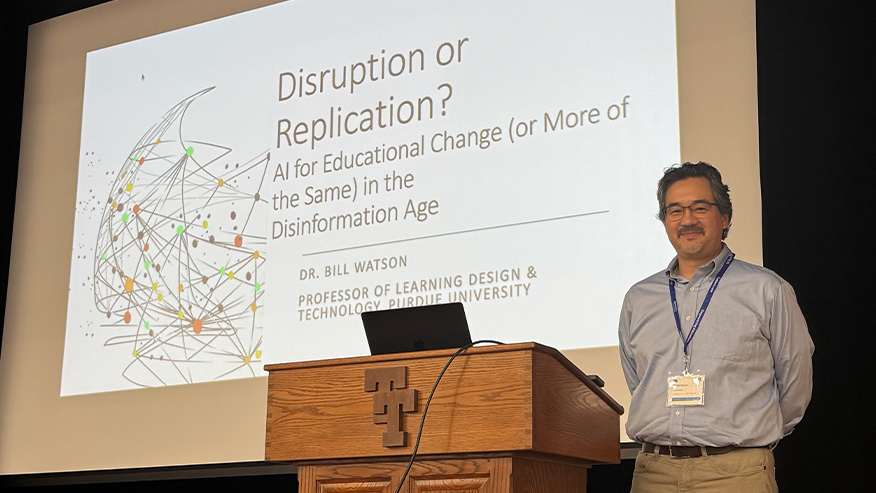
Bill Watson is a professor in the College of Education Department of Curriculum and Instruction’s Learning Design and Technology Program.
Bill’s research scholarship focuses on realizing a personalized paradigm of education that optimally meets all learners’ needs rather than focusing on calendars and schedules to the detriment of learning. This includes new paradigm instruction like game-based learning and attitudinal learning; technology for facilitating personalized learning; and systems thinking to design personalized educational systems.
